A human design talk at Humans breakfast concentrated on our handprint
In March 2024, world’s leading geologists concluded that humankind still hasn’t transformed the planet in such a profound way that our “own” chapter of the last 250 years or so in Earth history could in geological terms be called the Anthropocene, or human age, and added as such to the official timeline of Earth’s history.[1]
We’re still considered as being in development of a modern human culture from the hunter-gatherer stage to the practice of agriculture and finally to the emergence of cities and a civilization using a written language – this period being called Holocene, a geological epoch of the last 11 560 years.
However, both epochs, be they 1 epoch or 2 separate ones, are being marked by human impact on Earth, whether that impact is considered significant or profound or not.
Anthropocenic implications made by humankind are, generally speaking, the ones we mean when talking about climate crisis and the loss of biodiversity: they affect Earth’s oceans, geology, geomorphology, landscape, limnology, hydrology ecosystems and climate. Humans make an impact.
The geological perspective is world-embracing, yet the terminology is intriguing. And the man-made substance, the implications remain the same irrespective of the period definitions.
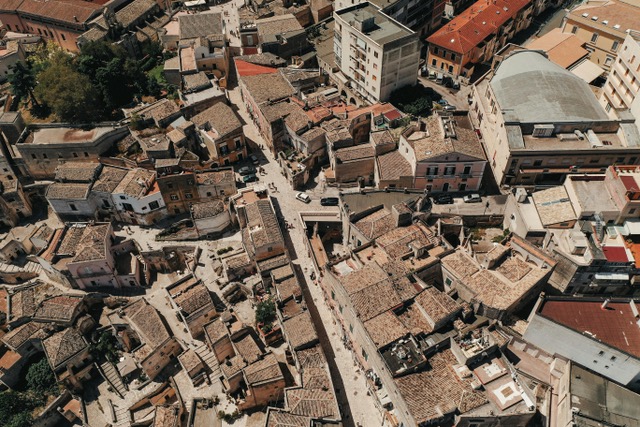
Sometimes the geological dimensions jump to our face at mind-boggling moments in nature or at eye-opening man-made shows we see. This happened to me in 2019 at the eye-opening exhibition “Blind Sensorium: The Paradox of Anthropocene”[2] – of all places on Earth, in Matera, an amazing 8000-year-old town in the Southern Italian region of Basilicata. That’s a place where man has had an impact on Earth for thousands of years, yet where humans lived in somewhat harmony with the nature, in caves, carved in limestone, all the way until WWII, the 1940s. Earth definitely made a bigger impact on man and woman than the other way round.
Ever since experiencing Matera and its dimensions has the impact we make on our culture, Earth and fellow humans with what we do been lurking at the back of my head.
Design – its efficiency and implications
Not that I would have all this particularly in my mind when I suggested to the Humans Board that we would look at the status of design, its current implications and developments as a topic to one of our Breakfast Clubs. It only occurred to me later.
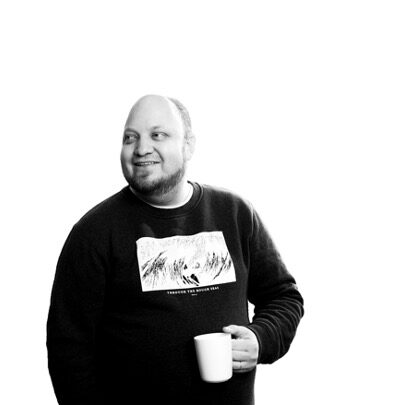
And that’s what we did in one beautiful October morning, inviting Finnish Design Directors Harri Kiljander and Juho Paasonen to talk about their definitions, impressions and opinions of where design as a human discipline is and where it’s going right now.
Harri and Juho came, and so did the Humans audience. And we talked.
And I want to emphasize: I did not bring all these ponderings forward in our pre-talk discussions with Harri and Juho.
It was meant to be a more general talk about where design has come from in the last 20-30 years when we’ve been in business, how it has transformed and where it’s going.
I got the title: “Demystifying design – metamorphosing design” from the visiting stars – it framed and reflected well the topics Harri and Juho wanted to talk about with the fellow Humans who came to share the breakfast moment with us.
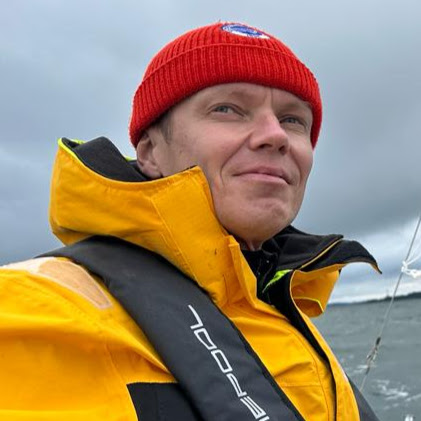
Harri mentioned “Demystifying design” always works as a good guideline when working at the interface between designers and other disciplines and when interviewing stakeholders, those actual owners and beneficiaries of most design projects. Design should work harmoniously with other business functions. Design terminology and methodology shouldn’t be excessively theorized upon in their own bubble – that doesn’t directly promote customer-centricity or business.
Juho described the design domain development, from industrial design and usability engineering to UI design, UX design, service design, organizational design, AI UX design and many other design sub-domains. Juho stated design is mature when “it has cut its roots”, when it’s built in in decision making. Design is creative, yet structured problem solving, and everyone is a problem solver. Nowadays there is a lot of design understanding, right questions and right attitude on business C-level. This as a reaction to the question: “Where should design reside in an organization?” Not that designers aren’t needed anymore, but mystifying design and its aura just serves some useless, self-sufficient purposes – mature, distinct design is perceived as an organic part of a good organization and its processes.
“Design” was chosen as the topic of this Humans breakfast discussion as the domain and “home” of human touch on society and environment, as opposed to business, technology, economy, engineering or cybernetics, for instance. “Human touch” on our society, environment and fellow humans is kind of a Kantian imperative at this point, no matter whether this point of human impact is called holocenic or anthropocenic.
Apropos impact. When the discussion unfolded and more planetary dimensions and sustainability implications came afore, Juho mentioned that very rarely do designers have the luxury to design for the planet. Yet, every designer should find their own corner from where to look and make more impact in the bigger picture. Impact, there again.
We talked about customer understanding and creating the insights, a process that is oftentimes mystified. About the friction in the process of “from insight-creation to prioritization of the desired action”. This is often a hard one and easily misunderstood in businesses and among stakeholders. Of course, prioritizing action means creating value. But value to whom, value of what? Value perceived broadly means creating impact.
Harri mentioned “beehive design”. Yes, beehives serve several purposes, also design wise. These include the production of honey, pollination of nearby crops, medical properties of honeybee products for humans, and mitigating the effects of a potential bee colony collapse disorder. Beehives can also be transported so bees can pollinate crops elsewhere. Several patents have been issued for beehive designs. Beehive is a powerful design metaphor.
Design – and its impact
The discussion concentrated on the efficiency of design. Sometimes the top leadership questions and remarks rotate too much around efficiency issues, regarding the designers’ work. Sometimes the customer research might even bring about “wrong” results from the executive point-of-view – something that digs up the ground from under an upcoming perceived hip product in the business’s pipeline. True, that sometimes happens.
However, efficiency, correctly understood, might be a designer’s friend, reminded Juho. It releases time to do more crucial work.
Harri talked about Design Ops, Design Operations, which is a systematic approach to organize people and processes to enhance impact. Design Ops pass efficiency by including the human element in the process to refine the working environment, making it better. Attracting great designers happens through building a creative culture. Creativity. Human element. Enhancing impact.
And that’s where Juho grabbed it again: impact. Don’t talk about efficiency, talk about impact. Impact carries with itself the human experience. Efficiency can co-exist but create a culture that leads the efficiency, is not being led by efficiency.
A question from audience wondered how to define, as a designer or researcher, the value we provide for the business, as “efficiency” as a leading principle for a researcher is problematic? There has to be something more foundational that creates value.
Harri accompanied Juho: formulate the results under the umbrella of impact. Align your research questions and ensuing answers with the company’s high-level objectives. Make an impact within the organization.
There it is again: impact. Impact carries with itself the human experience.
Why impact?
Back at home I’m pondering the discussion we just had, from the human-made-impact perspective.
We definitely have enough information, and not only information, but knowledge to make an impact with our work, to turn the ship. We have enough methods, tools, vocabulary, processes, we know enough, but we don’t always remember enough how to make an impact.
Impact carries with itself the human experience. Knowledge carries thinking, and in itself, thinking also carries human experience.
We don’t need to live in Anthropocene to make a impact, a positive handprint, instead of negative footprint. Holocene is enough. Design with a handprint, not a footprint.
Text: Juha Hemánus
Sources
[1] https://www.nytimes.com/2024/03/20/climate/anthropocene-vote-upheld.html
Featured image: Townscape of Matera, Southern Italy, where modern houses have been built on top of ancient, human-inhabited limestone caves, “sassi”. Sassi are still used as cellars. Photo: Wendelin Jacober @Pexels Public Domain

